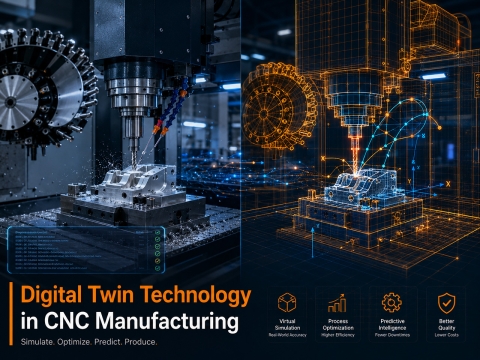
Investering i en CNC-maskine er en af de mest betydningsfulde beslutninger, en lille virksomhedsejer kan træffe. Uanset om du driver et træbearbejdningsværksted, et metalværksted eller en hjemmebaseret håndværksvirksomhed, kan computer numerisk styringsteknologi omdanne råmaterialer til præcisionsprodukter med en hastighed og konsistens, som manuelle værktøjer simpelthen ikke kan matche. Det globale CNC-maskinemarked er vurderet til over $100 milliarder og forventes næsten at fordobles inden 2032, drevet af automatiseringsefterspørgslen på tværs af bil-, luftfarts-, medicinal- og forbrugsvaresektorerne. Denne vækst afspejler et bredere skift: virksomheder i alle størrelser anvender CNC for at forblive konkurrencedygtige.
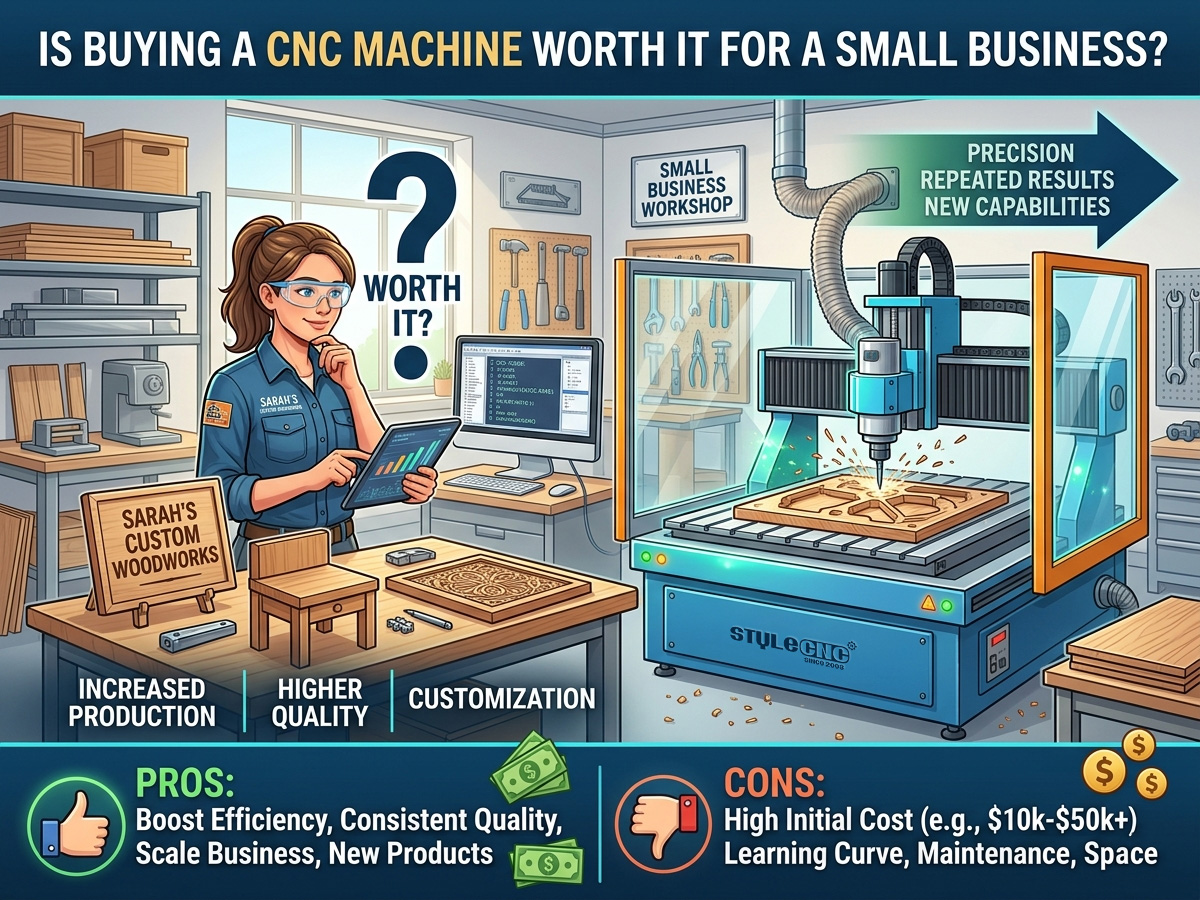
Men spørgsmålet forbliver praktisk. Er en CNC-maskine en god investering i din specifikke situation? Denne guide gennemgår de reelle omkostninger, profitpotentiale, indtjeningsbenchmarks og strategiske overvejelser, så du kan træffe en informeret beslutning, før du investerer kapital.
Hvad gør en CNC-maskine egentlig for en lille virksomhed?
En CNC-maskine læser digitale designfiler og oversætter dem til præcise fysiske udskæringer, udskæringer, graveringer eller svejsninger på materialer som træ, metal, akryl, sten og plast. For en lille virksomhed betyder det, at du kan producere alt fra specialfremstillede møbelkomponenter og skilte til industridele og personlige gaver, alt sammen med gentagelig nøjagtighed og minimal manuel indgriben.
De praktiske fordele for små virksomheder omfatter batchkonsistens (hvert stykke matcher den digitale fil), hurtig prototyping til nye produktidéer og muligheden for at opfylde specialordrer uden at hyre specialiseret faglært arbejdskraft til hver opgave. CNC-fræser til små virksomheder kan håndtere skiltefremstilling, skabskomponenter, 3D udskæringer og dekorative paneler, der effektivt erstatter 3 eller 4 manuelle processer.
Hvor meget koster det at starte en CNC-maskinevirksomhed?
Opstartsomkostningerne varierer meget afhængigt af typen af CNC-udstyr, arbejdspladskrav og omfanget af de operationer, du har til hensigt at starte. Nedenfor er en realistisk omkostningsfordeling for almindelige indgangspunkter:
| Business type | Udstyrsomkostninger | Total opstart | bedst til |
|---|---|---|---|
| Hjemmebaseret hobby-CNC | $2,000 - $8, 000 | $3,000 - $12,000 | Etsy-sælgere, kunsthåndværkere, bijob |
| Lille værksted | $8,000 - $30,000 | $15,000 - $50,000 | Specialfremstillede skilte, møbler, småpartidele |
| Professionelt maskinværksted | $30,000 - $100,000 + | $60,000 - $200,000 + | Kontraktproduktion, industrielle dele |
| Laserskæringsstudie | $3,000 - $50,000 | $6,000 - $70,000 | Gravering, skæring, mærkning |
De samlede opstartsomkostninger inkluderer ikke kun selve maskinen, men også softwarelicenser (CAD/CAM-pakker), værktøj og bor, støvopsamling eller røgudsugning, ændringer i arbejdsområdet og de indledende råmaterialer. For en detaljeret prisanalyse, se den fulde Prisguide til CNC-router at sammenligne modeller på tværs af budgetniveauer.
Er en CNC-virksomhed rentabel? Data om reel indtjening?
Det korte svar er ja, men rentabiliteten afhænger af din niche, prisdisciplin og hvor effektivt du holder din maskine kørende. Branchedata viser, at velstyrede CNC-operationer opnår følgende benchmarks:
| metric | Lille/Hjemmebutik | Professionel butik |
|---|---|---|
| Årlig omsætning (pr. maskine) | $30,000 - $80,000 | $150,000 - $400,000 |
| Bruttovinstmargin | 20% - 40% | 20% - 50% |
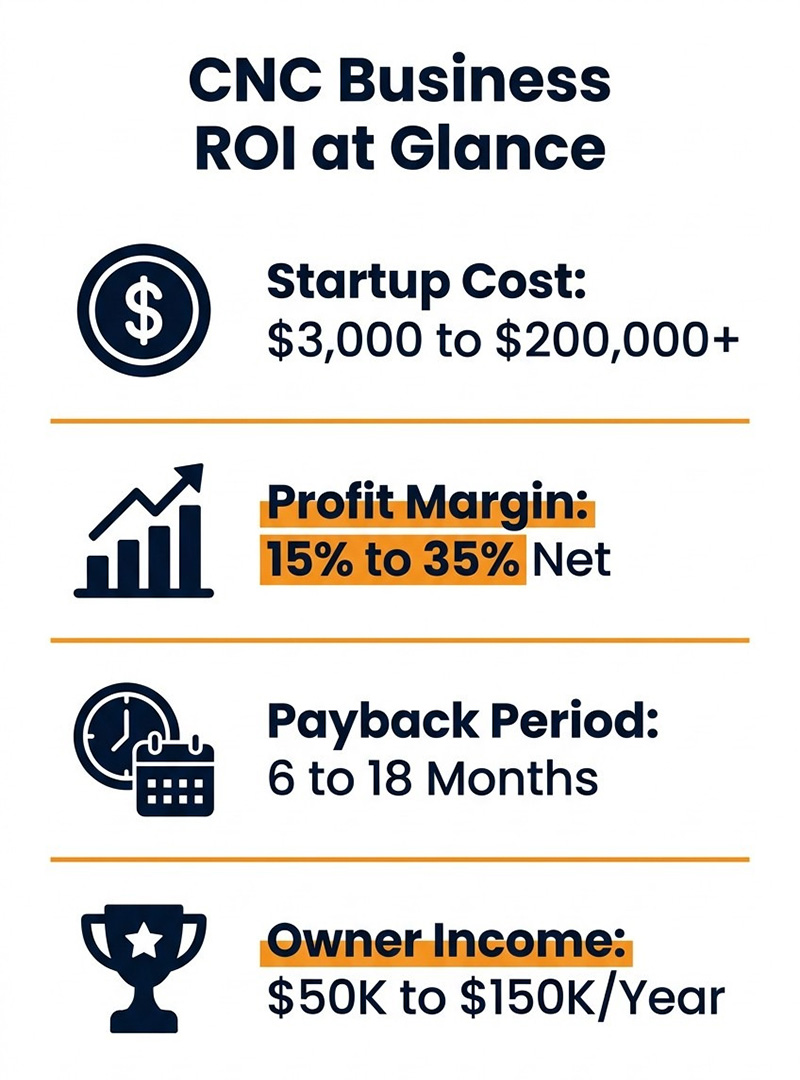
| Netto overskudsgrad | 10% - 25% | 15% - 35% |
| Typisk tilbagebetalingsperiode | 6 - 18 måneder | 2 - 5 år |
| Ejerens årlige indkomst | $30,000 - $70,000 | $50,000 - $150,000 + |
Ejere af CNC-maskinværksteder i USA tjener mellem $50,000 og $150,000 årligt, afhængigt af værkstedsstørrelse, geografisk placering, specialisering og automatiseringsniveau. Operatører, der arbejder inden for nicher inden for luftfart og medicinsk udstyr, rapporterer konsekvent de højeste marginer, fordi disse sektorer kræver snævre tolerancer og streng dokumentation, hvilket skaber naturlige barrierer for lavpriskonkurrence.
For dem, der vurderer, om en router specifikt retfærdiggør investeringen, er dette ROI-analyse af CNC-router dækker break-even-matematikken i detaljer.
De mest rentable CNC-projekter for små virksomheder
Ikke alt CNC-arbejde genererer lige stort afkast. De mest profitable projekter kombinerer høj opfattet værdi, lave materialeomkostninger og stærk markedsefterspørgsel. Baseret på aktuelle salgsdata fra platforme som Etsy, Amazon Handmade og direkte B2B-kanaler leverer disse kategorier konsekvent de bedste marginer:
| Projektkategori | Gennemsnitlig salgspris | Materielle omkostninger | Profit Margin |
|---|---|---|---|
| Brugerdefinerede træskilte | $50 - $300 | $5 - $30 | 60% - 80% |
| Personlige skærebrætter | $40 - $120 | $8 - $20 | 55% - 75% |
| Specialfremstillede møbler | $200 - $2, 000 + | $40 - $400 | 40% - 60% |
| Metalfremstillingsdele | $100 - $5, 000 + | $20 - $1, 000 | 30% - 50% |
| Lasergraverede gaver | $15 - $80 | $2 - $10 | 70% - 85% |
| 3D Udskæringer og reliefkunst | $100 - $500 | $10 - $50 | 65% - 80% |
Iværksættere, der udforsker laserbaserede indtægtsstrømme, kan gennemgå komplet guide til at starte en laserskærevirksomhed til valg af udstyr, prisstrategier og rammer for kundeerhvervelse.
Nøglefaktorer, der bestemmer CNC-investeringsafkast
Flere variabler påvirker direkte, om din CNC-maskine bliver et profitcenter eller et afskrivningsaktiv, der samler støv. Det er afgørende at forstå disse faktorer, før du køber:
Maskinudnyttelsesgrad
Den største enkeltstående indikator for rentabilitet. Værksteder, der holder deres CNC kørende 40+ timer om ugen pause endnu hurtigere. Målet er mindst 50% til 65% udnyttelse af tilgængelige maskintimer til at dække overhead og generere profit.
Nichevalg
Råvarejobcentre konkurrerer næsten udelukkende på pris. Virksomheder, der specialiserer sig, hvad enten det er i flykomponenter, specialfremstillede skabe, arkitektonisk fræsning eller personlige forbrugerprodukter, har højere priser og mindre konkurrence.
Prissætningsstrategi
Underprissætning er den mest almindelige fejltilstand for nye CNC-virksomheder. Din pris skal dække maskinafskrivninger, værktøjsslid, materialespild, opsætningstid, designtid, overhead og en sund profitmargin. En typisk pris for CNC-værksted varierer fra $50 til $120 i timen for design og bearbejdning kombineret.
Materialeindkøb og affaldshåndtering
Indkøb af råmaterialer i løs vægt, effektiv indlejring af dele i din CAM-software og genbrug af afskæringer til mindre produkter bidrager alt sammen til forbedring af marginen over tid.
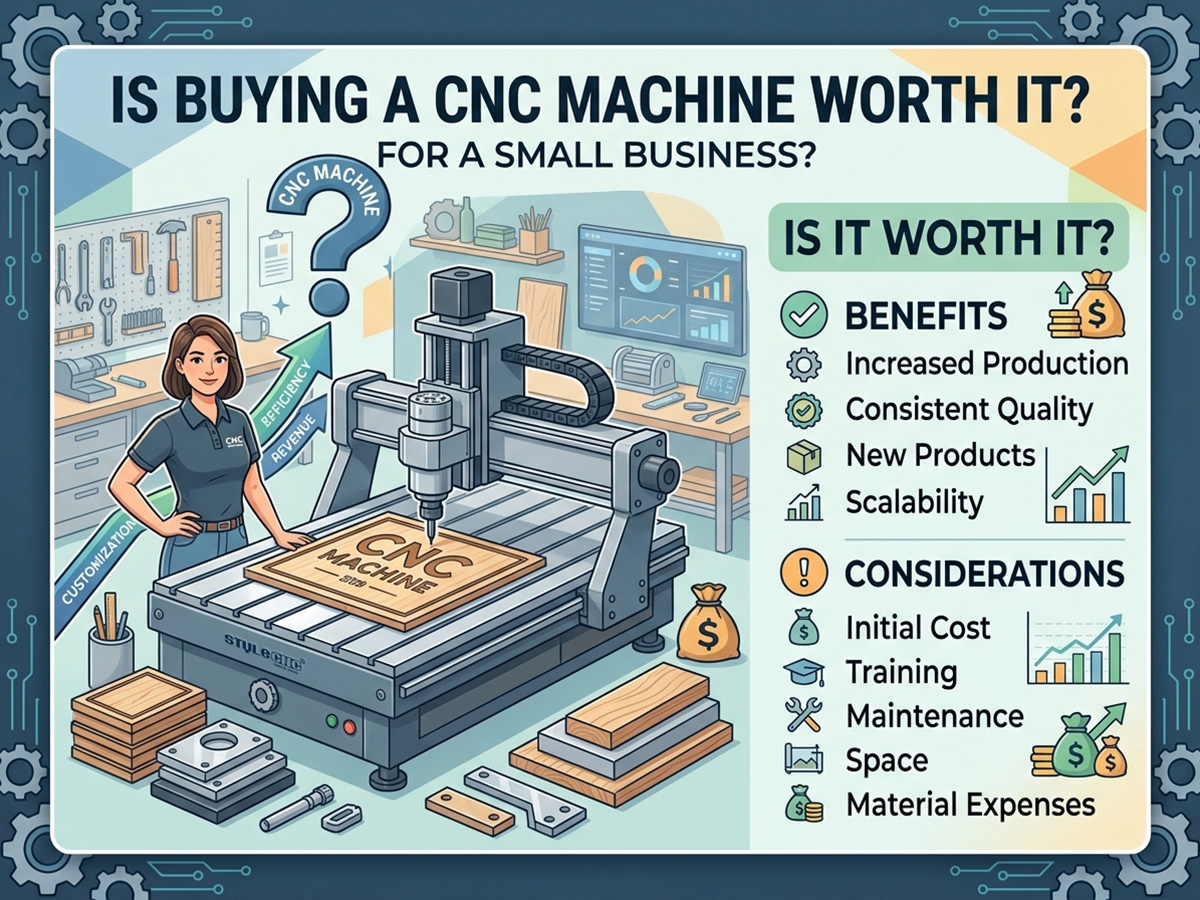
CNC-maskinetyper: Valg af den rigtige til din virksomhed
Valg af det rigtige CNC-udstyr er fundamentet for en succesfuld drift. Hver maskintype bruges til forskellige materialer, brancher og prisniveauer:
| Maskintype | Prisklasse | Bedste materialer | Ideelle applikationer |
|---|---|---|---|
| CNC-router | $2,000 - $80,000 | Træ, MDF, akryl, skum, bløde metaller | Møbler, skilte, skabe, 3D udskæringer |
| Lasergraver | $300 - $30,000 | Træ, læder, glas, akryl, belagt metal | Personalisering, gaver, branding, prototyper |
| Fiber Laser Cutter | $15,000 - $300,000 + | Stål, aluminium, kobber, messing, titanium | Plademetaldele, industriel fremstilling |
| Plasma Cutter | $5,000 - $60,000 | Blødt stål, rustfrit stål, aluminium (tyk) | Metalkunst, strukturelle dele, gård/ranch |
| CNC Mølle | $8,000 - $150,000 + | Metaller, tekniske plastmaterialer | Præcisionsdele, prototyping, værktøjsfremstilling |
Førstegangskøbere bør starte med komplet CNC-router købsguide at forstå rammestivhed, spindeleffekt, styresystemer og softwarekompatibilitet, før man sammenligner specifikke modeller.
Trin for trin: Sådan starter du en lille CNC-virksomhed
At starte en CNC-virksomhed kræver en struktureret tilgang. Følg disse trin for at minimere risikoen og fremskynde din vej til rentabilitet:
Trin 1. Undersøg dit lokale marked. Identificér hvilke brancher i nærheden af dig, der har brug for CNC-tjenester. Skiltefirmaer, snedkerforretninger, metalproducenter og eventplanlæggere er almindelige første kunder.
Trin 2. Vælg en niche, før du vælger en maskine. Din målgruppe bestemmer maskintypen, lejestørrelsen, spindeleffekten og den softwarepakke, du har brug for.
Trin 3. Beregn de samlede ejeromkostninger. Medregn værktøj, software, materialer, vedligeholdelse, støvopsamling, strøm og leje af arbejdsplads ud over maskinens pris alene. Se Prisoversigt for CNC-træbearbejdningsmaskine for detaljerede tal.
Trin 4. Opbyg en portefølje inden lancering. Skab 10 til 15 prøveprodukter, der viser din maskines muligheder. Fotografér dem professionelt til din hjemmeside og dine sociale kanaler.
Trin 5. Sæt rentable priser fra dag ét. Beregn din produktionspris ved at dividere alle månedlige overheadomkostninger med tilgængelige produktionstimer og derefter lægge din målmargin til.
Trin 6. Investér i markedsføring og digital tilstedeværelse. En professionel hjemmeside, lokal SEO, Google Business Profile og markedspladslister på Etsy eller Amazon Handmade fremmer den indledende ordreflow.
Trin 7. Skalér med automatisering. Efterhånden som volumen vokser, kan du tilføje automatiske værktøjsskiftere, batchbehandlingsworkflows og indlejringssoftware for at øge gennemløbet uden proportionalt at øge arbejdskraften.
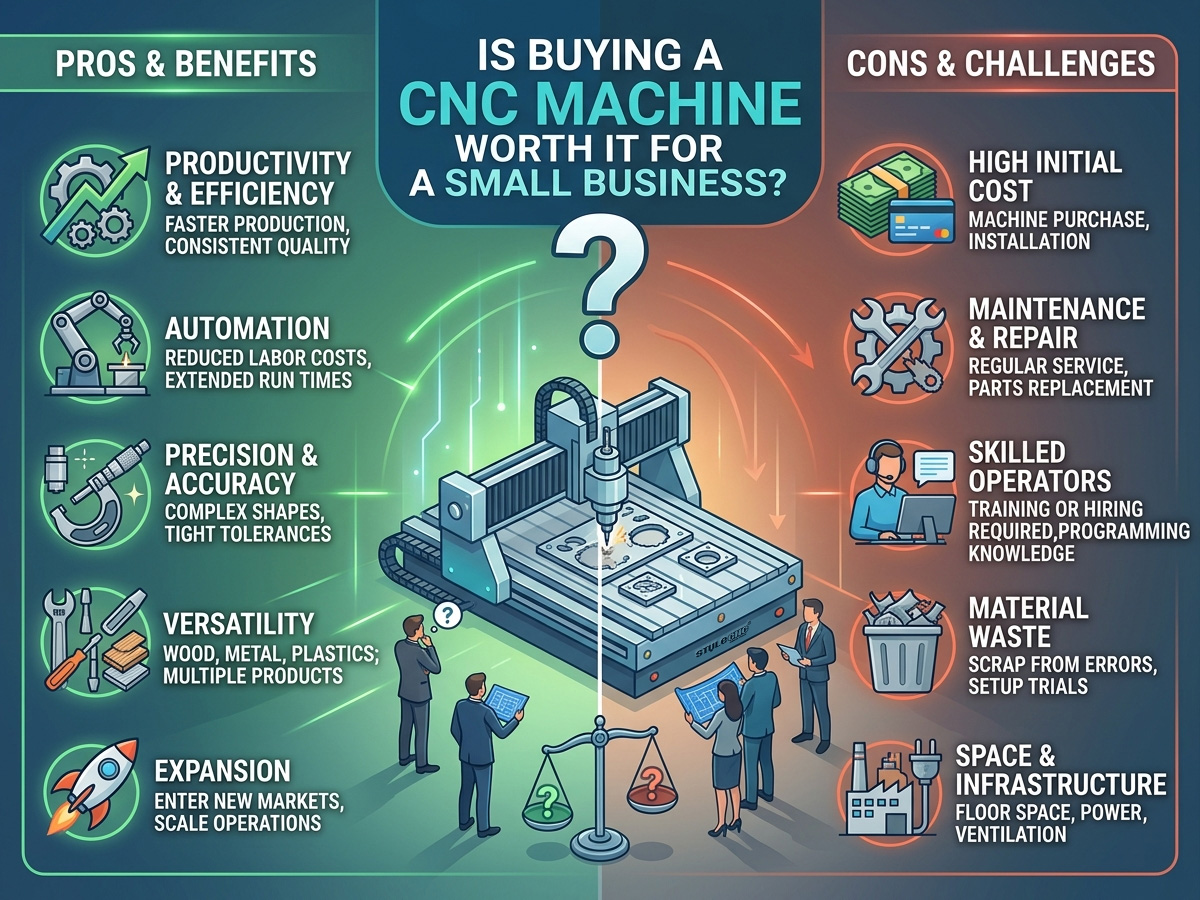
Fordele og ulemper ved at købe en CNC-maskine til en lille virksomhed
| ✔ Fordele | ✘ Udfordringer |
|---|---|
| • Producerer identiske dele med en præcision på under en millimeter i hver kørsel | • Betydelig forudgående investering i kvalitetsudstyr |
| • Reducerer arbejdsafhængighed og fremskynder produktionen med 3 til 10 gange i forhold til manuel produktion | • Læringskurve for CAD/CAM-software og maskinbetjening |
| • Muliggør brugerdefinerede produkttilbud til premiumpriser | • Løbende omkostninger til værktøj, vedligeholdelse og materialer |
| • Maskiner kan køre uden opsyn med korrekt opsætning og sikkerhed | • Kræver dedikeret arbejdsplads med strøm og ventilation |
| • Åbner adgang til indtægter fra B2B-kontraktproduktion | • Markedsundersøgelser er nødvendige for at undgå overfyldte produktnicher |
Hvornår er det (og ikke er) det værd at købe en CNC-maskine?
En CNC-investering giver god økonomisk mening, når:
✔ Du har allerede en produktidé eller en kundebase, der kræver præcisionsfremstilling
✔ Du bruger over $500/måned outsourcing af CNC-arbejde til tredjepartsværksteder
✔ Jeres nuværende manuelle produktionsmetoder skaber flaskehalse, der begrænser omsætningsvæksten
✔ Du kan realistisk set bruge 20+ timer på maskinen om ugen
✔ Du er villig til at investere 3 til 6 måneder i at lære CAD/CAM og maskinbetjening
Overvej at udsætte købet, hvis:
• Du har endnu ikke identificeret et klart marked eller en klar kundebase.
• Din forventede månedlige produktionsvolumen ville efterlade maskinen inaktiv 80%+ af tiden.
• Dit tilgængelige budget dækker kun maskinen, men ikke værktøj, software og materialer.
CNC-markedsudsigter: Hvorfor det er et godt tidspunkt at investere nu
Det globale marked for CNC-maskiner oplever vedvarende vækst drevet af produktionsautomatisering, reshoring-initiativer og ekspansion inden for produktion af elbiler, luftfart og medicinsk udstyr. Brancheanalytikere forudser, at markedet vil vokse fra ca. $101 milliarder i 2025 til over $195 milliarder inden 2032, hvilket afspejler en sammensat årlig vækstrate på nær 10%Nordamerika er ved at blive den hurtigst voksende region, drevet af indenlandske produktionsincitamenter og implementering af smarte fabrikker.
For små virksomhedsejere omsættes denne makrotrend til en stigende lokal efterspørgsel efter præcisionsdele, prototypetjenester og specialfremstilling. Virksomheder, der etablerer CNC-kapaciteter, positionerer sig nu til at fange arbejde, efterhånden som forsyningskæder fortsætter med at lokalisere, og større producenter søger pålidelige partnere i små værksteder til overløbsproduktion og specialiserede korte oplag.
Endelig dom: Skal du købe en CNC-maskine?
En CNC-maskine er en af de mest produktive kapitalinvesteringer, en lille virksomhed kan foretage, forudsat at man griber det an med et klart markedsfokus, realistiske omkostningsforventninger og engagement i at lære teknologien. Dataene understøtter stærke afkast: typisk tilbagebetalingstid inden for 6 til 18 måneder for små virksomheder, nettoprofitmarginer på 15 % til 35 % for velfungerende drifter og voksende markedsefterspørgsel på tværs af stort set alle fremstillingssektorer.
Start med at definere din niche, beregne dine samlede ejeromkostninger og opbygge en lille portefølje af prøveprodukter. Vælg derefter en maskine, der matcher dine specifikke produktionsbehov og dit budget. Med disciplineret prisfastsættelse og konsekvent markedsføring kan en CNC-virksomhed levere økonomisk uafhængighed og kreativ opfyldelse i mange år fremover.
Klar til at vælge din første CNC-maskine? Udforsk det fulde STYLECNC produktkatalog at sammenligne routere, lasere, plasmaskærere og fræsemaskiner med gratis ekspertkonsultation og verdensomspændende forsendelse.